
Ngorongoro Conservation Area
Located in northern Tanzania within the world-renowned Ngorongoro Conservation Area, the Ngorongoro Crater is one of Africa’s most extraordinary natural wonders and a UNESCO World Heritage Site. Often referred to as the “Eighth Wonder of the World,” this vast volcanic caldera offers one of the most unique wildlife experiences anywhere on the planet.
Formed around two to three million years ago when a massive volcano collapsed inward after a major eruption, the crater today measures approximately 20 kilometers (12 miles) across and covers an area of about 260 square kilometers (100 square miles). Its steep walls rise roughly 600 meters (2,000 feet) above the crater floor, creating a natural enclosure that supports one of the densest concentrations of wildlife in Africa.
The crater floor is a breathtaking landscape of open grasslands, acacia forests, freshwater springs, and soda lakes. At its heart lies the beautiful Lake Magadi, a shallow alkaline lake that attracts thousands of flamingos and other water birds, adding vibrant color to the landscape.
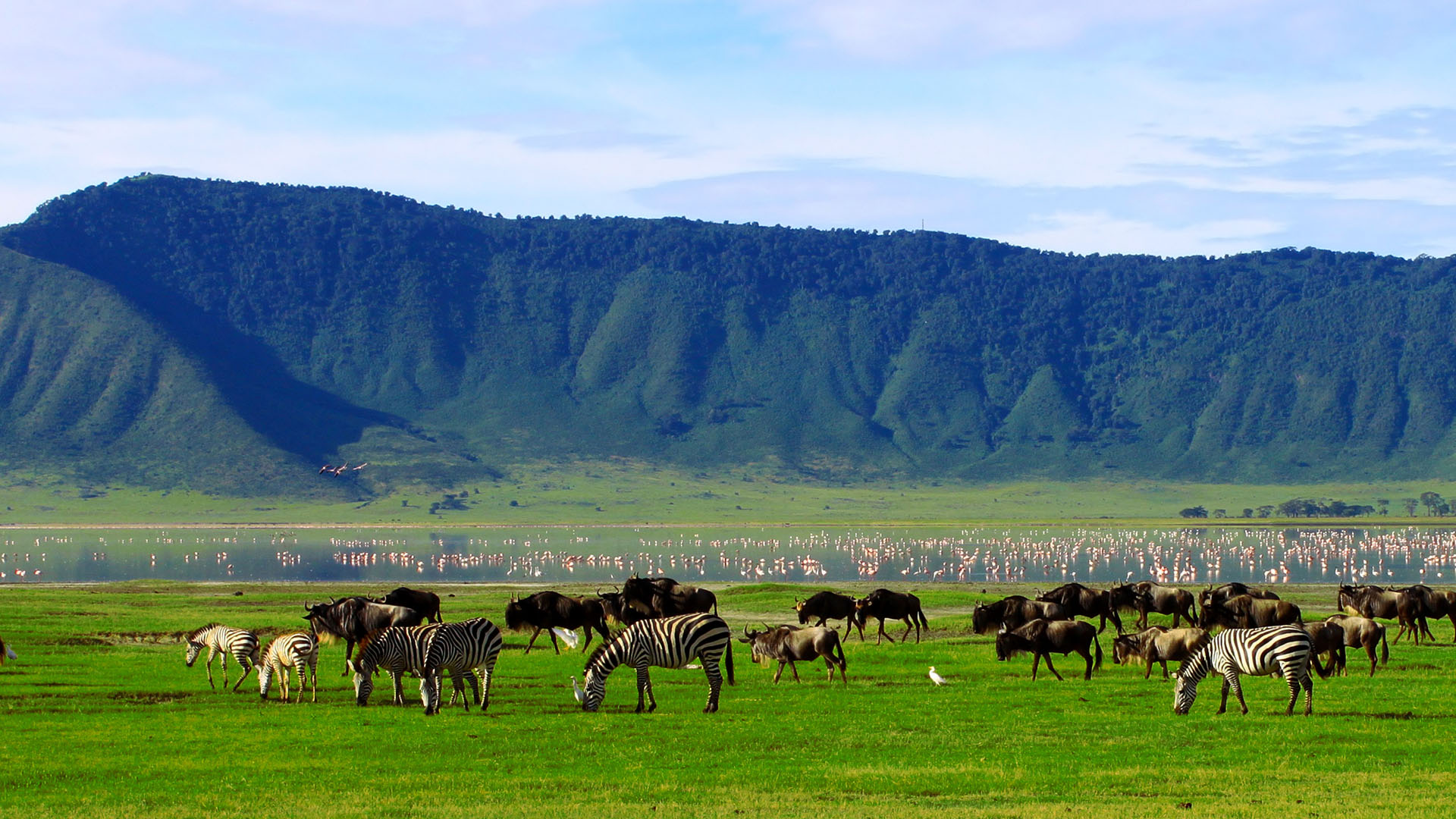
Ngorongoro Crater is famous for its remarkable wildlife population, with more than 25,000 animals living within the caldera. Visitors have the rare opportunity to see the Big Five—lion, leopard, elephant, buffalo, and the critically endangered black rhino—within a relatively small area. The crater is also home to large herds of wildebeest, zebra, gazelle, and warthogs, which in turn attract predators such as lions and hyenas. The permanent water sources and fertile grazing lands allow many animals to live in the crater year-round.
One of the most special highlights of Ngorongoro is the chance to spot the rare black rhinoceros, making it one of the best places in East Africa to see this endangered species in the wild. The crater is also known for its impressive population of lions, often seen resting in the grasslands or hunting across the open plains.

Beyond wildlife, the surrounding highlands of the Ngorongoro Conservation Area are home to the Maasai people, who continue to live a traditional pastoral lifestyle. Their presence adds a unique cultural dimension to the region, where wildlife conservation and human habitation coexist in a remarkable balance.
The views from the crater rim are spectacular, especially at sunrise when mist often blankets the crater floor before slowly lifting to reveal the wildlife-filled landscape below. Scenic viewpoints along the rim offer unforgettable photographic opportunities and breathtaking panoramas.
Because of its stunning scenery, abundant wildlife, and unique geological history, Ngorongoro Crater is considered one of the most iconic safari destinations in Africa. It is frequently combined with visits to nearby parks such as Serengeti National Park and Lake Manyara National Park, forming part of Tanzania’s famous Northern Safari Circuit.
A safari to Ngorongoro Crater promises unforgettable encounters with nature, dramatic landscapes, and some of the best wildlife viewing opportunities anywhere in the world.